
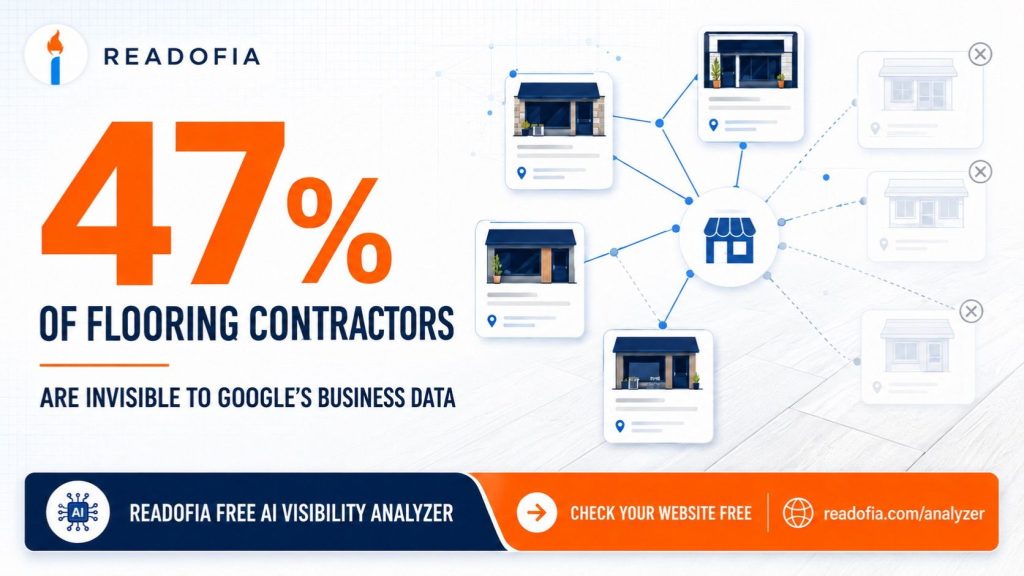
Of the 142 flooring contractor sites I scanned, 67 had no LocalBusiness structured data . That is 47%, nearly half.
38 had no structured data of any kind – not even the basic markup most website builders add automatically.
What structured data is
It is a block of code sitting in your page that states your business facts in a format machines treat as reliable. Your name. Address. Phone. Hours. Service area. The type of business you are.
It is invisible to visitors. It is the first thing a search engine looks for.
Why it decides things
- A human reads “Serving Greater Phoenix since 2011, garage floors and polished concrete” and understands instantly.
- Google reads that sentence and makes an inference. It is usually right, but it is a guess.
- AI tools are more cautious than Google. When ChatGPT has to name three epoxy contractors in Phoenix, it picks from businesses whose details it can state confidently. A guess is not confidence.
- So the contractor with schema gets named. The one without gets skipped, even with better reviews and better work.
This is the cheapest fix on the list
- It is one block of code in your site’s header. A competent developer does it in under an hour. There is nothing to redesign, nothing to rewrite, no content to produce.
- Nearly half the contractors I scanned have not done it.
- That is unusual. Most competitive gaps require money or years. This one requires one afternoon, and it is sitting open in every metro I looked at.
How to check yours
Google’s Rich Results Test is free and public. Paste your homepage URL in and see whether business markup comes back. If nothing does, that is the finding. It is also the easiest thing on your site to fix.
Next in this series: 63% of these sites take over a second to respond. On a phone that is the difference between a call and a bounce.
Free 30-second scan of your own site:
readofia.com/analyzer